
 .
. Theoretical Foundation for Mathematics
ABSTRACT
This new theoretical foundation for mathematics explains numbers and numeric operations. In addition to providing a basis for reasoning about what is known, this new theory provides for the construction and definition of new numbers. This foundation secures long sought after stability for mathematics which in turn contributes to the integrity of scientific knowledge.
-

Beginning Construction Site
The theory of Math starts with a blank context. Then the ability to add is introduced; and ones are delivered as raw materials
-
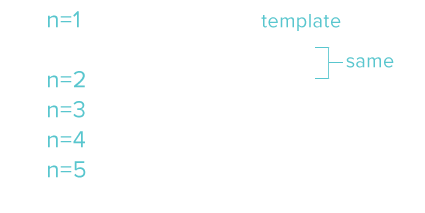
Natural Numbers as Templates
The first meanings built are natural numbers. They become templates for defining new operations called first-order ops. Note: “+” = “*1”.
-
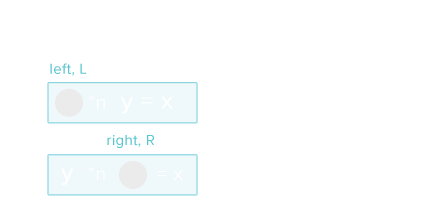
More Operations and New Numbers
Definition via fill-in-the-blank method leads to more operations and numbers. Only L-order ops and R-order ops for n =1,2 and 3 have been analyzed in the math literature to date.
-
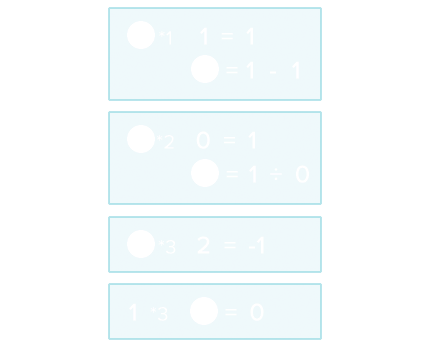
Special Numbers
Certain combinations lead to special numbers. Special numbers are used to define basis numbers.
A Place of understanding
Introduction
Truth. How do you know whether what you believe is true or not? Or, how do we know whether what society accepts as knowledge is true or not?
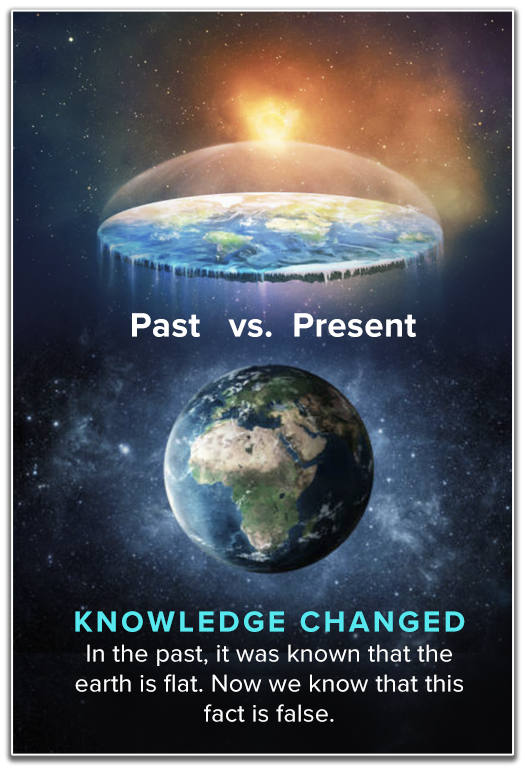
In the past, it was “known” that “the earth is flat.” This key fact was critical to the scientific understanding of how the world and universe worked. Now, we know that this fact is false. Furthermore, history has had more than one knowledge revolution as Thomas Kuhn shows in his work The Structure of Scientific Revolutions. Each revolution has led to the demise of cherished facts.
Through Kuhn’s work, we have become aware that people working onknowledge accept many assumptions that make up a paradigm. Given society’s track record, we admit the possibility that the current paradigm could change. Consequently, today’s scientist lives with the threat that his or her research could be negated if the reigning paradigm is overturned.
The following treatise presents the opportunity to rectify this situation so that what we know as a society continues to be true indefinitely.
How is this Posible
All knowledge rests on assumptions. If fundamental assumptions that have long-term integrity and avoid incorrect biases could be identified and accepted by the community of scholars, then we could secure a reliable paradigm and foundation.
The following body of work proposes this kind of axiomatic assumptions.
If ideal assumptions are proposed, however, would everyone agree to accept them as the standard group of assumptions? The history of knowledge development includes controversy over definitions, territory disputes, ad hoc theories, and destructive politics. If agreement on standards could be sustained, then productivity, accuracy, and reliability could be greatly increased.
The following pages set forth assumptions, definitions, rules, and methods that are proposed as standards for the work we do together on knowledge. These standards provide a universal frame of reference that is a reliable basis for explanations about how the world works. This foundation supplies the keys to truth.
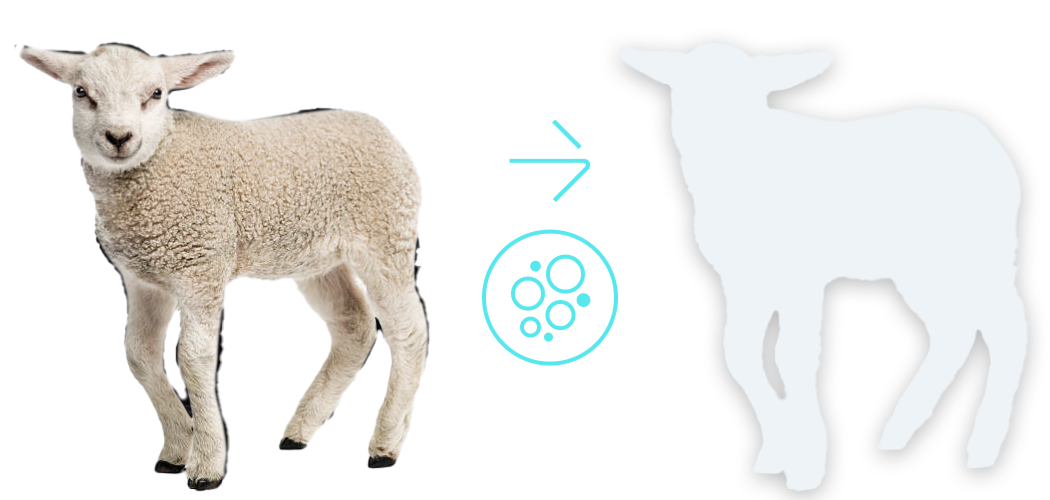
EXPERIENCE THROUGH EXPERIMENTS
Experiments in cloning led to the first cloned sheep. These experiments relied on assumptions regarding theenvironment, the integrity of cellular structures, and mechanisms of biological life.
ASSUMPTIONS
Generally, a person builds his or her knowledge base from experience and the lessons taught by parents and teachers. Similarly, society builds its knowledge base from experience and lessons. The experience that contributes to academic knowledge is gained through experiments, and the lessons are produced by the theoretical research of scholars.
Both experimental and theoretical work require assumptions. An assumption is a statement accepted as true without proof” [American Heritage Dictionary, 2nd College Edition, 1983). For experimental work, assumptions are utilized to develop the objectives, design, and conclusions of each investigation. For theoretical work, assumptions called axioms are utilized to logically deduce statements called theorems. Deductive reasoning guarantees that if the axioms are true, then the deduced theorems are true.
Problems with our knowledge base occur when fundamental assumptions are: a) too complex, b) false, c) con-tradictory, and/or d) ambiguous.
What assumptions are your beliefs built on? What assumptions would you choose as the foundation of society’s collective knowledge?
The modern paradigm includes assumptions about the Big Bang and evolution. Thus, someone might want to start with: “The world as we know it is the result of the Big Bang.”? This would be an inappropriate starting place because “the world as we know it” and “the Big Bang” are complex concepts. In particular, an understanding of the Big Bang requires some physics (mass, time, energy) and geometry (point, distance, space) and an explanation. An assumption that is too complex does not aid in providing an understanding of the big picture from its atomic parts. It can also lock in a bias that prevents discovery, as was the case with “the earth is flat” assumption.
Others might start with the clear, simple assumptions of Euclidean geometry. One of these axioms is: “A point and a distance define a circle.” This, however, is a false assumption for physical space since it implicitly assumes that spatial relationships are restricted to two dimensions. Dimension is a key concept for spatial relationships, and assuming some definite number may lock in an incorrect bias.
If someone chose: “Anything is possible” and “Space extends indefinitely in all directions” then the choice of assumptions would be contradictory. In a universal system where anything is possible, it is possible for a boundary to limit space in some direction. Thus, the axiom “space extends indefinitely in all directions” is a type of law that countermands the principle that anything is possible.
Given the difficulty of selecting good assumptions, some scholars try to avoid assumptions. Research requires assumptions, however, so avoiding them means that the assumptions are hidden and ambiguous. When assumptions are known and clear, they can be tested. When they are hidden and ambiguous, they cannot be tested, and they can lock in a bias that inhibits discovery.
Assumptions are tested by examining the results that have been deduced from the assumptions against experimental observations.
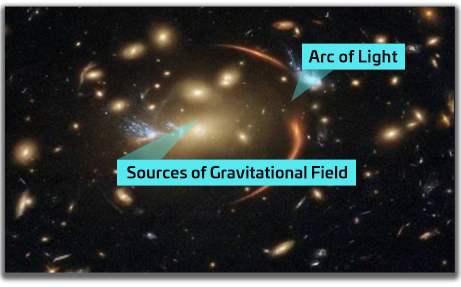
LIGHT BENDS!
A test of Einstein’s theoretical assumptions was made through seeing whether his prediciton about the behavior of light in agravitational field was true or not. The phenomenon of light travelling a curved path in a gravitational field was previously unknown before
For example, Einstein’s theory called General Relativity includes the assumption that light travels at a constant speed in a vacuum. A deduced result of the theory is that light bends in a gravitational field. Scientists performed an experiment when a known star was partially blocked by the sun to see if the light from the star shone straight or was bent in the gravitational field produced by the sun. The light bent. Their verifica- tion of Einstein’s prediction was a stunning validation of the theory’s assumptions.
On the other hand, the same theory predicts gravitation waves which have not been detected in experiments. This leads to the suspicion that Einstein’s assumptions are not entirely correct.
In summary, assumptions provide a critical basis of understanding. They need to be simple, true, consistent, clear, and explicit. Once assumptions are made explicit they can be tested for validity.
WORD SELECTION
In order to begin setting forth axiomatic assumptions, we need to use words that communicate effectively.
The only valid place to start in the world of communication is to use the words that we learn from experience independent of academic training in a given scientific discipline; otherwise, there would be circularity that undermines the effectiveness of defining scientific explanations. Let a common, informal language used by any large society apart for purposes other than math or science be called natural language.
Typically, the words taken from natural language for the purpose of making axioms are called primitives. Primi- tives are also used for the first formal definitions in a development.
A body of work in mathematical logic provides an example of a problematic choice of primitives.
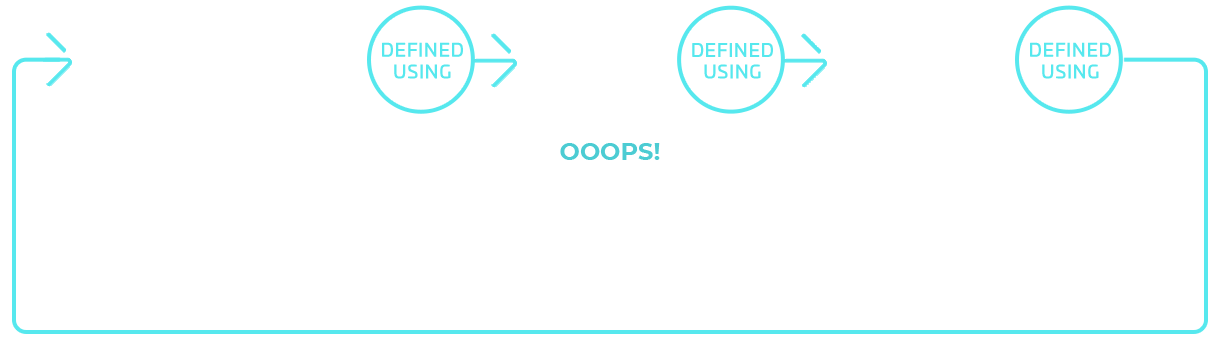
Mathematical logic sets forth an analytical tool to aid in the development of knowledge called the First-Order Predicate Calculus. The basic atoms of the Predicate Calculus are constant letters ai (e.g. a1, a2, a3, a4,…), variables xi (e.g. x1, x2, x3, x4,…), function letters f and predicate letters A where i and j refer to counting num- bers. The founders believed that the vocabulary of natural language included counting numbers; however, one of the ultimate goals was to better understand numbers and numeric relationships. Thus, the Predicate Calculus became a theoretical context for defining a formal theory of mathematics. Both formal Number Theory and Set Theory were constructed address this need. The end result is this. Numbers
areconcepts that gain their meaning from the context of mathematics. Mathematics is formally defined through Set Theory. Set Theory is defined using the Predicate Calculus. And the Predicate Calculus is defined using numbers which are defined by mathematics, which is defined by Set Theory, which is defined by the Predicate Calculus, which is defined by… Thus, the Predicate Calculus and formal Set Theory were defined through a form of circular reference. Definition through circular reference, however, does not work. It is as useful as saying “I define a googlethorpe to be a googlethorpe.” Consequently, a reliable foundation or basis for work- ing on knowledge requires a successful choice of elementary meanings [primitives] and assumptions. Consider again, however, the difference between personal knowledge and society’s knowledge. Can we work together on knowledge if everyone uses a different foundation?
IMPORTANCE OF STANDARDS
Knowledge can be seen as a large system that many different groups are working on. People who work on knowledge acquisition have experienced regular controversy over assumptions and language standards. This is an age-old problem as is evidenced by the Tower of Babel legend from ancient times. Working together as a group requires some attention to process since each individual in a group has his or her own idea of the best way to proceed. Typically, theories that advance explanations for society’s knowledge have been advanced in an ad hoc manner. How do we decide whose ideas and explanations are correct? Is it on the basis of which school the scholar received a degree from? Is it on the basis of the subjective opinions of experts, or because it fits with what we want to believe? In order for a group to be productive, everyone in the group must accept certain standards. Therefore, not only do primitives and axioms need to properly fulfill their role. they need to be identified and set as the standard. Let’s confront our differences to hash out a single foundation. Then, we can avoid many of the battles in individual disciplines that have marked the academic land- scape to date. Being explicit about key principles, assumptions, expectations, logic standards, language stan-
dards, etc. provides a big payoff in productivity. If we can agree to use a single foundation that supplies these standards, including standards for how to draw conclusions about knowledge, then nothing will stand in our way. We can pool our resources to discover all that is possible to know.

FINDING WAYS TO COMMUNICATE
Explanations of what is known should start with simple, elementary notions.
THE PROPOSAL FOR MOVING FORWARD
To summarize, the means to achieve reliable knowledge requires agreement among scholars to use a common foundation that provides a successful choice of elementary meanings and assumptions. Following is a draft proposal for a candidate to become this common foundation of academic scholarship. To the extent that we can find consensus for a final version of the standards that constitute this foundation, we will establish a common setting for working together on knowledge. As all development work takes place in some type of workspace such as a construction site or a factory, this body of work is called Place of Understanding. Alternate names are Place and P.
DOCUMENT MAP
- I. PreliminariesSome preliminary matters for getting started need to be addressed. A key distinction is made between noun meanings and verb meanings.
- II. DefinitionThis section includes basic assumptions and definitions related to the means to effect definitions.
- III. ConstructionThis section includes basic assumptions and definitions related to the means to effect definitions.
- IV. CommunicationThis section includes basic assumptions and definitions related to the means to effect communication.
A definition for true statements is set forth as well as principles of logic as they have been developed over the past centuries by many scholars. - V. Theories: Mental Construction SitesStandards for theory development are chosen to avoid inconsistency and ambiguity.
- VI. Some ResultsThis section uses axioms and results from the previous sections to deduce some results. For example, the following faculties of a fully-functioning mind are deduced: the presence of a Language Center and the presence of a Logic Center. The section concludes with a proof that if a theory complies with the standards of Place, then it is consistent.
- VII. ConclusionThe conclusion assesses whether the assumptions it proposes are consistent and sets forth expectations for moving forward.
FINDING A PLACE TO START
We have to start somewhere. Rather than debate the matter endlessly, please consider the axioms and defini- tions of Place of Understanding. The justification for taking these particular axioms and these particular initial definitions is provided by the delivery of a desirable mix of simplicity and utility in achieving the stated goals. For this type of development, if the axioms and definitions are accepted, then the results achieved through deductive reasoning are valid and acceptable.
Once scholars modify and finalize this protocol, the principles of knowledge acquisition formalized in Place of Understanding will provide a type of constitution. Scholars will have a stable system of government to provide order and justice for their work.
ASSUMPTIONS OF THE AUTHOR
I make the following assumptions in attempting this work:
Assumption MAE
Modern, American, written English can be used:
– as a known system of symbols and meanings1
– as a means to communicate
The words, meanings and language practices defined in this paper supersede or overrule existing definitions.
Note that these assumptions are basic assumptions of every academic paper written in American English.
Also, in the following pages:
"Def»" signals that a definition follows
"Syn>" signals that a rule of syntax follows
"iff" is an abbreviation for "if and only if"
GOALS
- I Explicitly, the objective of the following body of work is to provide:
- a) a universal frame of reference for understanding anything and b) a theoretical foundation for sound knowledge.
- Characteristics of success, as dis- cussed, include the following goals:
I. the identification of consistent axioms that we can agree on
II. axioms and definitions composed from natural language that is elemen-tary and independent from any specific discipline of science
III. the ability to provide an explanation, any expla- nation, that meets the expectations of the science commu-nity for clarity and consistency. - A universal frame of reference for understanding anything must be neutral to any specific discipline allowing experiments and analysis to determine which explanation is preferred.
- Please see if you can agree with the axioms pro- posed in the following sections. And please consid- er whether this system achieves these objectives and can provide a standard for working together on knowledge.